Peptide Dosage Protocols: What Published Studies Used
Published peptide dosage data from preclinical studies. Species, route, dose per kg, duration and results for BPC-157, TB-500 and related peptides.
Every peptide vendor page lists a dose. Most of them pulled that number from thin air. We went back to the actual published studies and recorded exactly what researchers administered, to which species, by which route, at what concentration and for how long. Nothing on this page is a human dosing recommendation. It is a reference log of what appeared in peer-reviewed papers so you can trace the numbers yourself.
How Peptide Doses Are Reported in the Literature
Micrograms per Kilogram, Not Milligrams per Person
Preclinical papers report doses in micrograms per kilogram of body weight (mcg/kg). This is weight-normalized, which means the same study dose applies differently to a 250-gram rat and a 70-kilogram human. A dose of 10 mcg/kg given to a rat that weighs 0.25 kg is 2.5 mcg of actual substance. That same 10 mcg/kg applied to a human would be 700 mcg. But that multiplication is not how pharmacology works, because metabolic rate scales non-linearly across species. The allometric scaling section below explains why.
The second source of confusion is unit conversion. Forum posts routinely mix up micrograms and milligrams. One milligram equals 1,000 micrograms. A vendor selling a 5 mg vial is selling 5,000 mcg of peptide. When a study says 10 mcg/kg, that is a very small amount relative to what sits in a standard research vial.
Route of Administration Matters
A peptide injected intraperitoneally (into the abdominal cavity) in a rat reaches the bloodstream differently than one given by oral gavage (forced feeding through a tube). Bioavailability changes with route. The same peptide at the same dose can produce measurably different tissue concentrations depending on how it enters the body. Studies that show an effect via intraperitoneal injection do not guarantee the same result via subcutaneous or oral delivery. Route is not a footnote. It is a core variable.
- Standard unit
- mcg/kg (micrograms per kilogram body weight)
- 1 mg
- 1,000 mcg
- Common study species
- Rat (Wistar, Sprague-Dawley), mouse, rabbit
- Most common route
- Intraperitoneal (IP) injection
- Other routes tested
- Oral gavage, subcutaneous, intragastric, topical, intramuscular
- Frequency in most studies
- Once daily
BPC-157 Doses Used in Published Studies
The table below pulls directly from published BPC-157 papers. Only controlled studies with clearly stated doses, routes and durations are included. Each row cites its PubMed identifier so you can verify the numbers. A 2025 systematic review cataloged 544 preclinical studies and one qualifying clinical analysis for BPC-157 as a biopharmaceutical candidate (PMID 42198317). The doses below represent a subset of those most frequently cited.
| Species | Route | Dose (mcg/kg) | Frequency | Duration | Outcome Measured | PMID |
|---|---|---|---|---|---|---|
| Rat | Intraperitoneal | 10 | Once daily | 14 days | Achilles tendon healing, increased load to failure | 30915550 |
| Rat | Intraperitoneal | 10 | Once daily | 14 days | Gastric ulcer reduction, mucosal protection | 29998800 |
| Rat | Intraperitoneal | 10 | Once daily | 7 days | Muscle crush-injury recovery, reduced fibrosis | 29998800 |
| Rat | Oral gavage | 10 | Once daily | 14 days | Colitis model, reduced lesion area | 29998800 |
| Rat | Intragastric | 10 | Once daily | 14 days | NSAID gastroprotection | 29998800 |
| Rat | Topical (cream) | 1 mcg/wound | Once daily | 10 days | Diabetic wound closure, collagen deposition | 29998800 |
| Rat | Intraperitoneal | 50 | Once daily | 7 days | Ligament healing, improved tissue organization | 30915550 |
| Mouse | Intraperitoneal | 10 | Once daily | 7 days | TBI model, reduced lesion volume | 29998800 |
Intraperitoneal Studies
The majority of published BPC-157 data uses intraperitoneal injection. This route delivers the peptide directly into the peritoneal cavity, bypassing the gastrointestinal tract entirely. Doses cluster around 10 mcg/kg, with some studies testing both 10 and 50 mcg/kg to establish dose-response curves. The 10 mcg/kg figure appears so consistently across the Zagreb group's publications that it functions as their standard protocol. Whether that dose is optimal, minimal or excessive for other species has not been established.
Intraperitoneal injection is a laboratory technique. It is not a route used in human clinical practice. This matters when you see someone on a forum converting IP rat doses directly to subcutaneous human injections. The absorption kinetics are different. The peritoneal membrane is highly vascularized in rats and provides rapid systemic absorption. Subcutaneous delivery in humans is slower and less predictable.
Oral Gavage Studies
Oral studies used the same 10 mcg/kg dose range as IP studies. This is unusual. Most peptides degrade rapidly in gastric acid, so oral bioavailability is typically a fraction of injected bioavailability. BPC-157 is reported to be stable at pH 1-2 for over 24 hours, which may explain why oral dosing showed effects in gut-specific models. The oral studies focused primarily on gastrointestinal endpoints: ulcer protection, colitis reduction and mucosal healing. Whether oral BPC-157 reaches systemic circulation in meaningful concentrations remains unclear from the preclinical data. We have not found a published pharmacokinetic study measuring plasma levels after oral administration in any species.
Topical Application Data
Topical BPC-157 studies used a different dosing paradigm. Instead of mcg/kg, researchers applied a fixed amount of peptide directly to the wound bed, typically in a cream or gel vehicle. The amounts were in the low microgram range per application. Endpoints included wound closure rate, collagen deposition and angiogenesis markers. The topical data is the smallest subset of BPC-157 research and has limited independent replication.
TB-500 Doses Used in Published Studies
TB-500 is a synthetic fragment of thymosin beta-4 (TB4). The published dosage data comes from studies on the full thymosin beta-4 protein, not always from the truncated TB-500 fragment that vendors sell. We note which form each study used. A 2012 review of thymosin beta-4 in wound healing (PMID 23084823) compiled data across multiple injury models.
| Species | Form | Route | Dose | Frequency | Duration | Outcome | PMID |
|---|---|---|---|---|---|---|---|
| Rat | TB4 (full) | Intraperitoneal | 6 mg/kg | Once daily | 14 days | Dermal wound closure, keratinocyte migration | 23084823 |
| Mouse | TB4 (full) | Intraperitoneal | 150 mcg | Every other day | 14 days | Cardiac repair post-MI, reduced scar area | 23084823 |
| Mouse | TB4 (full) | Subcutaneous | 6 mg/kg | Once daily | 7 days | Corneal wound healing, reduced inflammation | 23084823 |
| Rat | TB4 (full) | Topical | 5 mcg per application | Twice daily | 7 days | Ocular surface healing | 23084823 |
Systemic Models
Thymosin beta-4 systemic doses in animals ranged substantially higher than BPC-157 doses. The 6 mg/kg figure is milligrams, not micrograms, making it roughly 600 times the dose level used in BPC-157 studies on a per-kilogram basis. This difference is rarely mentioned in forums where the two peptides are discussed interchangeably. Different peptides require different amounts. Assuming they operate at similar concentrations is a mistake.
Local Injection Models
Some studies delivered thymosin beta-4 directly to the injury site. Local delivery uses smaller absolute quantities because the peptide does not need to distribute systemically. The corneal studies used topical drops, while cardiac studies injected directly into peri-infarct tissue. These routes are study-specific and do not map to the subcutaneous injection protocols discussed in peptide communities. For a comparison of BPC-157 and TB-500 study data, see our BPC-157 + TB-500 stack breakdown.
Other Peptide Dosage Data
We compiled dose data for three additional peptides that appear frequently in the research supply market. The evidence base for each is smaller than for BPC-157 or thymosin beta-4.
| Peptide | Species | Route | Dose | Duration | Key Finding | PMID |
|---|---|---|---|---|---|---|
| GHK-Cu | Human (clinical) | Topical (cream) | Not weight-based; applied as formulated product | 12 weeks | Increased collagen synthesis in photoaged skin | 26236730 |
| GHK-Cu | Rat | Subcutaneous injection (wound margin) | 1-10 mcg per wound | 7-14 days | Wound contraction, collagen deposition | 18644225 |
| KPV | Mouse | Intraperitoneal | 200 mcg/mouse | 7 days | Reduced colonic inflammation in colitis model | Published anti-inflammatory tripeptide data |
| MOTS-c | Mouse | Intraperitoneal | 5 mg/kg | 7 days | Improved glucose metabolism, insulin sensitivity | Published mitochondrial peptide data |
GHK-Cu stands out because it has actual human clinical data, specifically for topical use. The doses were not reported in mcg/kg because the product was applied as a formulated cream at a fixed concentration. This makes GHK-Cu the only peptide in this table with a proven route-and-formulation pair tested on human skin (PMID 26236730). For topical GHK-Cu products, we have reviewed the best peptides comparison including Neurogan ($20.00), Scantifix ($49.00) and DoctorDerm ($74.50).
Why These Doses Cannot Be Applied to Humans
Allometric Scaling and Species Differences
A 250-gram rat is not a small human. Its metabolic rate per unit of body weight is roughly seven times higher than a human's. This means drugs clear faster in rats, which is why preclinical doses cannot simply be multiplied by body weight to get a human equivalent. The FDA publishes allometric scaling factors for converting animal doses to estimated human equivalent doses (HED). For rats, the conversion factor is approximately 6.2: divide the rat dose (in mg/kg) by 6.2 to estimate the HED in mg/kg.
But that conversion factor was developed for small-molecule drugs with well-characterized absorption and metabolism profiles. Peptides are different. They are degraded by proteases, have variable absorption depending on chain length and modification, and may not follow the same distribution patterns as small molecules. Applying the standard scaling factor to a peptide with no human pharmacokinetic data is guesswork with a formula on top.
Bioavailability Varies by Route
A 2025 biopharmaceutical review noted that BPC-157 bioavailability differs substantially by route and species. Intramuscular bioavailability was reported at 14-19% in rats and 45-51% in beagle dogs. Oral bioavailability is expected to be lower due to first-pass metabolism, though precise figures have not been published. This means the same dose given by different routes could deliver anywhere from one-fifth to one-half of the peptide into systemic circulation. Without human data, there is no way to know which end of that range applies.
Duration and Frequency Were Study-Specific
Most BPC-157 studies ran for 7 to 14 days. A few went to 28 days. No published study has tested continuous administration for months, which is what some forum protocols suggest. The safety and efficacy of long-term use is entirely unknown. We cannot tell you what happens at week 8 because nobody has published that data in any species.
Reconstitution Arithmetic
Converting Powder to Solution
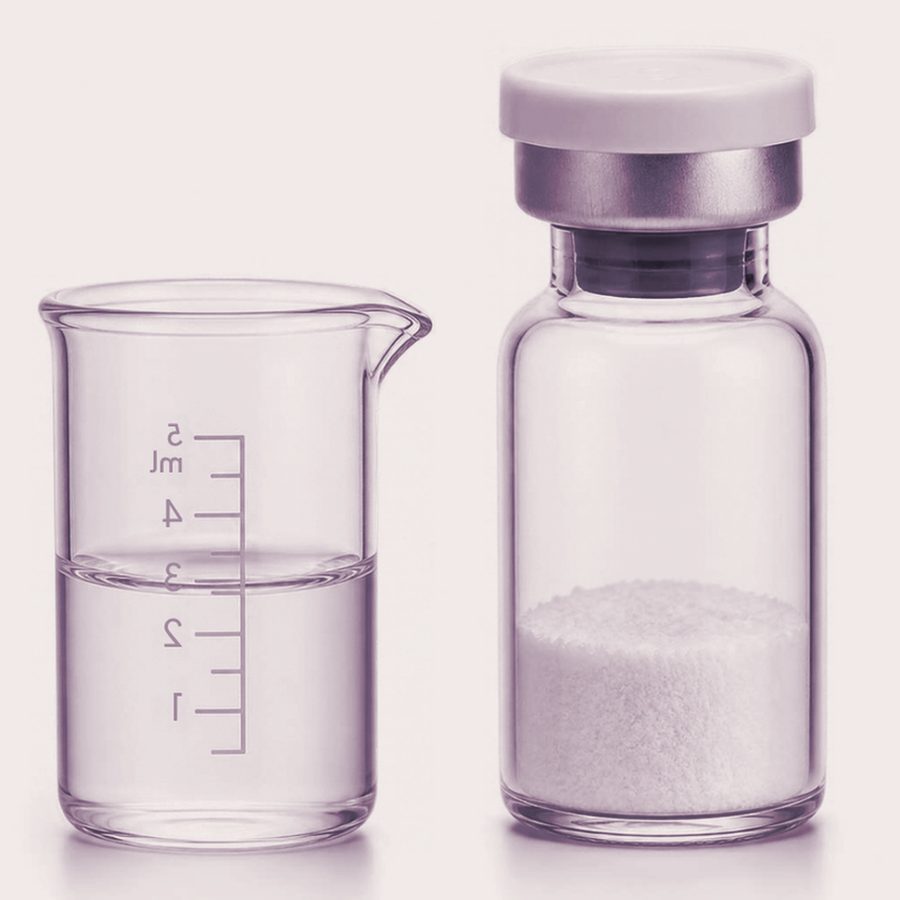
Peptides from research vendors ship as lyophilized powder. To use in a laboratory setting, the powder must be reconstituted with bacteriostatic water (BAC water). The arithmetic is straightforward: divide the total peptide mass by the volume of water added to get concentration. Real Peptides sells a 10ml bacteriostatic water vial for $4.80, which is what most reconstitution setups use as the diluent.
Example calculation: A vial contains 10 mg (10,000 mcg) of peptide. You add 2 ml of bacteriostatic water. The resulting concentration is 10,000 mcg / 2 ml = 5,000 mcg per ml. Each 0.1 ml (10 units on a standard insulin syringe) would contain 500 mcg. This is pure arithmetic, not a dosing instruction.
Concentration per Unit of Volume
Different vial sizes produce different concentrations for the same volume of water. A Peptide God BPC-157 vial at $34.95 and a Real Peptides BPC-157 10mg vial at $43.20 contain different confirmed amounts. The Real Peptides vial specifies 10 mg on the label with a published lot COA showing HPLC-verified purity of 99% or above. The Peptide God vial does not list the milligram amount on the product page. This matters for concentration calculations because the entire arithmetic depends on knowing how much peptide is actually in the vial.
We built a free tool that handles this math for any vial size and water volume. See the reconstitution calculator.
FAQ - Peptide Dosage
What doses of BPC-157 were used in studies?
The most common dose in published BPC-157 studies is 10 mcg/kg body weight, administered once daily by intraperitoneal injection in rats. Some studies tested 50 mcg/kg. Oral studies used the same 10 mcg/kg range. A 2018 review (PMID 29998800) summarized the dosing patterns across multiple tissue models. All doses are from animal studies. For more context, see our BPC-157 therapy overview.
Can you calculate a human dose from animal data?
Not reliably. The FDA provides allometric scaling factors as rough estimates, but these were validated for small-molecule drugs with known pharmacokinetics. BPC-157 has no published human pharmacokinetic profile. Converting a rat dose of 10 mcg/kg to a human equivalent using the standard 6.2 divisor gives approximately 1.6 mcg/kg, but that number carries very high uncertainty. We do not present it as usable because the assumptions behind it have not been validated for this peptide.
What route of administration was most common?
Intraperitoneal injection in rats. This is a laboratory technique where a needle enters the abdominal cavity. It is fast, delivers the peptide systemically and is straightforward in small animals. It is not a route used in human medicine. Subcutaneous and oral routes were tested less frequently. The peptide safety page covers why route matters for risk assessment.
Where can I find the reconstitution calculator?
Our peptide reconstitution calculator is a free tool on this site. Enter the vial size in milligrams and the volume of water in milliliters. The calculator outputs concentration per 0.1 ml (10 IU on a syringe). It is an arithmetic tool and does not provide dosing recommendations.
Nothing on this page constitutes medical advice. BPC-157, TB-500, GHK-Cu, KPV and MOTS-c are sold as research chemicals and are not approved for human therapeutic use by any regulatory agency. Consult a licensed healthcare provider before using any peptide product. For where to buy peptides from vendors we have reviewed, see our ranked comparison.
Compare the current picks
Prices, sizes and ratings side by side, updated when the merchant pages change.
Compare peptides