Oral vs Injectable Peptides: Forms, Data and Trade-Offs
Oral and injectable peptide forms compared. Bioavailability data, published study routes, vendor options and practical differences for research use.
Oral or injectable? The question sounds straightforward, but the answer depends on which peptide you are looking at, which tissue you are targeting and how much published data you are willing to accept as sufficient. We pulled bioavailability data from published studies, checked vendor product pages for available forms and laid out the trade-offs below. This is not a guide to personal use. These are research compounds, none of which are FDA-approved for human therapy. For general background on BPC-157, see our BPC-157 therapy overview.
- Oral bioavailability for most peptides
- <2% systemically
- BPC-157 oral stability
- Survives pH 1-2 for >24 hours in vitro
- TB-500 oral viability
- Not acid-stable; injection routes only
- GHK-Cu delivery method
- Topical (cream/serum); neither oral nor injectable in commercial products
- Standard injectable routes in studies
- Subcutaneous (SC), intraperitoneal (IP)
- FDA-approved peptide forms on this page
- 0
Why Delivery Route Matters in Peptide Research
The Bioavailability Problem
Most peptides are chains of amino acids held together by peptide bonds. Stomach acid and digestive enzymes break those bonds. That is what they are designed to do. The result: oral bioavailability for the typical peptide is below 2% for systemic circulation. The compound gets digested before it reaches the bloodstream. This is a fundamental pharmacological constraint, not a manufacturing deficiency.
Injectable routes bypass the GI tract entirely. Subcutaneous injection places the peptide directly into tissue where it can enter systemic circulation without facing gastric degradation. Intraperitoneal injection, common in rodent studies, achieves rapid systemic distribution. These routes consistently produce higher and more predictable bioavailability in animal models.
Why does anyone bother with oral peptides then? Convenience. Compliance. And in one notable case, the peptide actually survives the stomach.
BPC-157: The Exception to the Rule
BPC-157 is unusually stable in gastric acid. Published in vitro data shows the peptide maintains structural integrity at pH 1-2 for over 24 hours. That stability has allowed researchers to test oral administration in rodent models with measurable effects, particularly in gastrointestinal tissue. A 2018 review (PMID 29998800) documented cytoprotective effects in gastric lesion models using oral BPC-157.
Here is where the caveat lives. Oral stability does not equal oral bioavailability for systemic targets. BPC-157 survives the stomach. Whether it crosses the intestinal barrier in sufficient quantities to reach tendons, muscles or joints in humans has not been demonstrated. The published oral data is primarily in gut models, where the peptide acts locally. Extrapolating from "works orally in rat stomachs" to "works orally for tendon repair in humans" requires leaps that the data does not support.
Bioavailability by Route: What the Studies Report
| Route | Typical Peptide Bioavailability | BPC-157 Specific Data | Advantages | Limitations |
|---|---|---|---|---|
| Subcutaneous (SC) | 65-95% | Effective in tendon, muscle, wound models | High absorption, avoids first-pass metabolism | Requires injection supplies, sterile technique |
| Intraperitoneal (IP) | 70-90% (rodent standard) | Most common route in BPC-157 studies | Rapid systemic distribution | Primarily a lab technique, not practical outside research |
| Oral | <2% (most peptides) | Effective in gut models; systemic data lacking | Non-invasive, easy compliance | Enzymatic degradation, poor systemic bioavailability |
| Topical | Variable, skin-limited | Tested in wound models | Direct application to target tissue | Limited to skin and superficial tissues |
| Intranasal | 10-30% (peptide-dependent) | Not established for BPC-157 | Bypasses GI tract, faster absorption | Dose variability, limited volume |
How Published Studies Use Each Route
The route distribution across published BPC-157 studies shows what researchers actually use in controlled experiments. The pattern is clear: injection dominates. Oral administration appears primarily in GI-focused papers.
| Administration Route | Approximate % of Published Studies | Primary Research Application |
|---|---|---|
| Intraperitoneal (IP) | ~55% | Systemic injury models (tendon, muscle, nerve, vascular) |
| Oral (gavage) | ~20% | Gastrointestinal protection, ulcer, colitis models |
| Subcutaneous (SC) | ~15% | Local tissue repair, wound healing |
| Topical | ~5% | Wound closure, burn models |
| Intragastric / other | ~5% | Specialized GI models |
The takeaway: when researchers design controlled experiments with BPC-157, they overwhelmingly choose injection routes. Oral administration is reserved mainly for studies where the gut itself is the target tissue. This pattern exists for a reason. Injection gives a known dose to systemic circulation. Oral gives an unknown fraction of the dose to systemic circulation, with most of the action occurring locally in the GI tract.
Practical Comparison: Oral vs Injectable for Researchers
| Factor | Oral Peptides | Injectable Peptides |
|---|---|---|
| Preparation required | None (capsule) or minimal | Reconstitution with bacteriostatic water |
| Equipment needed | None | Syringes, alcohol swabs, BAC water, vials |
| Dose precision | Capsule-dependent; variable absorption | Measurable with calibrated syringe |
| Storage requirements | Room temperature (capsules) | Refrigeration after reconstitution |
| Sterility concerns | Low | High; contamination risk at injection site |
| Cost comparison | Often higher per dose (lower bioavailability) | Lower per effective dose (higher bioavailability) |
| Published evidence base | Smaller, mainly GI-focused | Larger, covers multiple tissue types |
| Compliance | Easy | Requires technique and routine |
What Vendors Actually Sell by Form
Not every peptide is available in both forms. Here is what appeared on vendor product pages at the time of writing.
| Product | Vendor | Form | Price | Reconstitution Needed |
|---|---|---|---|---|
| BPC-157 | PeptideGod | Lyophilized vial (injectable) | $34.95 | Yes |
| BPC-157 10 mg | Real Peptides | Lyophilized vial (injectable) | $43.20 | Yes |
| TB-500 | PeptideGod | Lyophilized vial (injectable) | $35.00 | Yes |
| BPC-157 + TB-500 | PeptideGod | Lyophilized blend (injectable) | $59.95 | Yes |
| MOTS-c 10 mg | Real Peptides | Lyophilized vial (injectable) | $43.20 | Yes |
| MOTS-c | PeptideGod | Lyophilized vial (injectable) | $49.95 | Yes |
| Epithalon | PeptideGod | Lyophilized vial (injectable) | $29.95 | Yes |
| GHK-Cu Cream | Neurogan Health | Topical cream (1200 mg, 2%) | $20.00 | No |
| GHK-Cu | Scantifix | Topical | $49.00 | No |
| Copper Complex | DoctorDerm | Prescription topical | $74.50 | No (telehealth Rx) |
| BAC Water 10 ml | Real Peptides | Reconstitution solvent | $4.80 | N/A |
The market skews heavily toward injectable lyophilized vials. Nine of the eleven products listed above require reconstitution. Only GHK-Cu products come in ready-to-use topical form. No vendor in this comparison sells BPC-157 capsules. Oral BPC-157 products do exist from other vendors not covered in our product reviews, but their claims and documentation have not been evaluated here.
The Oral BPC-157 Debate
What the Data Supports
Oral BPC-157 is a reasonable research choice when the target is gastrointestinal tissue. The peptide survives gastric acid, and multiple rodent studies show protective effects in the stomach and intestine via oral gavage. This is where the evidence is solid. Within the gut, oral delivery puts the peptide directly where the data says it works.
What the Data Does Not Support
For systemic targets like tendons, joints or muscles, the oral route is speculative. No published study has demonstrated that oral BPC-157 reaches these tissues in sufficient concentration to produce measurable effects in any species. The jump from "survives the stomach" to "reaches the Achilles tendon via oral dosing" requires pharmacokinetic data that does not exist. We see claims in forums that oral BPC-157 "works just as well" for joint issues. Those claims are not supported by published data.
A Practical Framework
A 2025 systematic review (PMID 42198317) documented which routes were used across the BPC-157 literature. Injection routes dominated for non-GI applications. Oral routes were used primarily in gut models. If published researchers choose injection for systemic targets, that pattern is worth noting.
What to Choose: Route Selection Scenarios
We do not recommend specific protocols. What we can do is lay out what the published evidence supports for different research interests.
Scenario 1: GI-focused research. Oral BPC-157 has the strongest justification here. The peptide reaches the target tissue directly via the oral route, and the preclinical data is dense. Injection routes also work for GI models, but oral delivery is simpler and has direct published support. Published study reference: PMID 29998800.
Scenario 2: Musculoskeletal or systemic tissue targets. Injectable BPC-157 is what published studies use for tendon, muscle and nerve models. Subcutaneous or intraperitoneal routes deliver a known dose to systemic circulation. The oral route lacks pharmacokinetic support for these targets. Published study reference: PMID 30915550.
Scenario 3: Skin or wound applications. Topical delivery makes sense for surface-level targets. GHK-Cu products from Neurogan Health ($20.00) and Scantifix ($49.00) are already formulated for skin application. BPC-157 topical formulations have been tested in wound models but are not widely available commercially. For deeper tissue targets, topical delivery is insufficient.
Scenario 4: Convenience is the priority. Oral capsules are the easiest to use. No reconstitution, no injection, no sterility concerns. But convenience comes with an evidence trade-off. If the evidence does not support the oral route for your target tissue, convenience is irrelevant. For more on peptide dosage protocols and safety considerations, see our dedicated pages.
FAQ - Oral vs Injectable Peptides
Is oral BPC-157 as effective as injectable?
For gastrointestinal targets, published rodent studies show comparable results between oral and injected BPC-157. For systemic targets like tendon, muscle or nerve tissue, there is no published data demonstrating equivalent oral efficacy. The oral route is supported where the gut is the target. For everything else, injectable routes dominate the published evidence.
Do I need bacteriostatic water for injectable peptides?
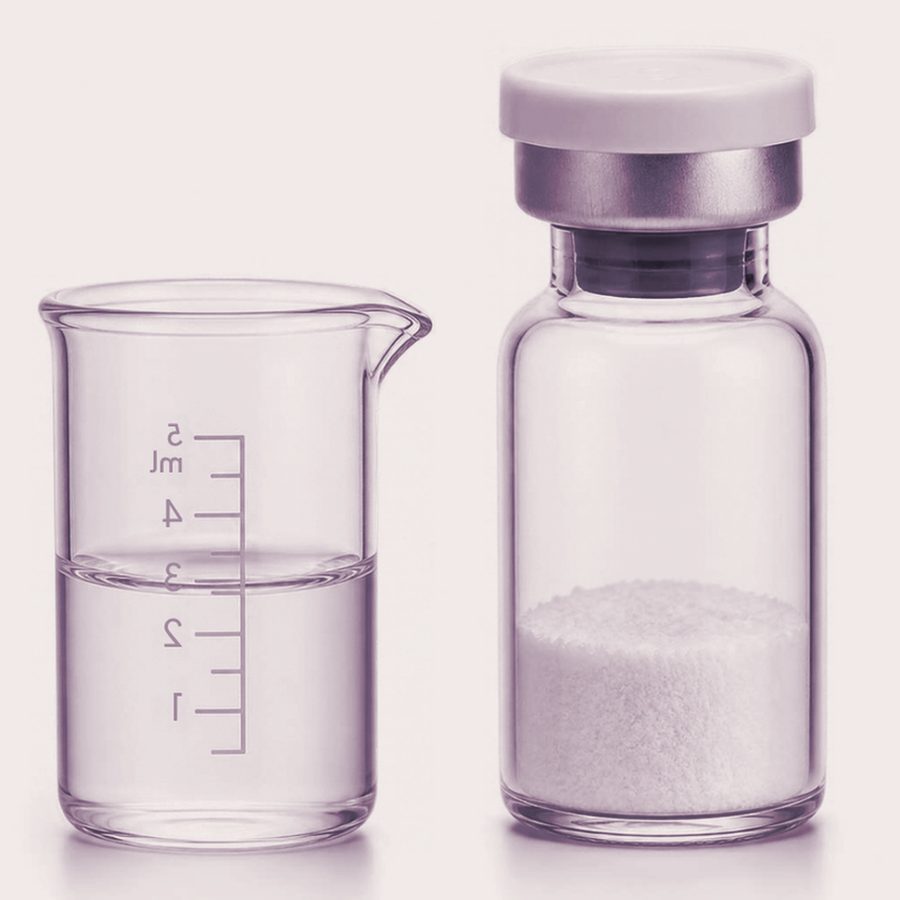
Yes. Lyophilized peptide powder must be reconstituted before use. Bacteriostatic water (BAC water) is the standard solvent. Real Peptides sells USP-grade BAC water at $4.80 for a 10 ml vial with 0.9% benzyl alcohol as a preservative. The benzyl alcohol inhibits microbial growth, allowing the reconstituted solution to be used over multiple sessions. Sterile water without a preservative must be used immediately. Our calculator handles the concentration math.
Can TB-500 be taken orally?
TB-500 is not stable in gastric acid. Published studies have tested Thymosin Beta-4 only through injection routes (IP and SC). No vendor sells an oral TB-500 product, and no published data supports oral administration. If your protocol requires TB-500, it is an injectable-only compound based on current evidence.
Why do most vendors sell lyophilized powder instead of capsules?
Lyophilized (freeze-dried) powder is more stable for storage and shipping than liquid or capsule formulations. It allows buyers to reconstitute at their chosen concentration. For most research peptides other than BPC-157, oral delivery is not viable due to gastric degradation, so capsule forms would be wasteful. The lyophilized format also has a longer shelf life before reconstitution. See our research peptides page for more on product forms.
Route selection is a scientific question, not a convenience question. Anyone considering peptide research should consult a qualified healthcare provider to discuss administration methods, safety considerations and the distinction between preclinical evidence and validated clinical protocols.
Compare the current picks
Prices, sizes and ratings side by side, updated when the merchant pages change.
Compare peptides